Every camping trip has a moment when the light question stops being theoretical. You are holding a pot handle with one hand and a spoon with the other, your headlamp is firing straight into the simmering water, and the rest of the picnic table sits in shadow. Or you are inside the tent with your headlamp on, throwing a hard white circle onto a paperback while the person beside you tries to sleep. Lanterns and headlamps are not rivals. They are two tools with two different jobs, and once you can name those jobs, packing gets a lot easier.
A headlamp is a beam. It throws a narrow, bright cone exactly where you point your face, and it does that without occupying your hands. That makes it superb for moving, for close-up work, and for anything you need to see in detail.
A lantern is an area light. It sits on a table or hangs from a loop and pushes soft, even light into a space rather than a direction. It is worse at detail and useless for walking any distance, but it lights the whole cooking zone or the whole tent instead of one small circle.
That single distinction, direction versus space, decides most of the questions below. A beam light is for the person. An area light is for the place.
For dinner at a picnic table, the lantern wins. Hang it above and slightly behind the cooking surface, roughly at or just above head height, so your own body does not block the light from reaching the pot. If you hang it in front of you, you will spend the whole meal cooking inside your own shadow.
Keep a headlamp on your head anyway, set to low. It is the right tool for the small jobs: checking whether the pasta is done, reading the tiny numbers on a stove valve, or finding the matches you just put down somewhere. Just angle it down at your hands. Nobody at the table wants your beam in their eyes, and a headlamp turned toward a friend across the fire is the fastest way to start a small camp argument.
Washing up and hauling water are headlamp tasks. You are walking, carrying, and reaching into a basin, which means you need light aimed at your hands and no spare hand to hold anything.
Reading is the clearest lantern victory. Hang a lantern from the ceiling loop or set it on low at the far end of the tent and two people can read at once, each with even light and no glare in anyone's face. A headlamp worn on your head while reading sends light directly at whoever is opposite you, and it lights the page unevenly.
The workaround many campers use is to clip the headlamp to the tent loop above and treat it as a tiny lantern. It works, especially with a diffuser cap or a soft white stuff sack over the lens, but it is a compromise rather than a plan.
For a real walk on an unlit trail, the headlamp is the only sensible option. You need your hands free, you need light where you are looking, and you need enough brightness to spot roots, rocks, and the edge of the path. Keep the beam aimed at the ground a few steps ahead rather than straight out into the dark, which flattens the terrain and makes every dip look like a hole.
For the short walk to the toilet block or the tree line, use red or the lowest white setting. Red light keeps your night vision intact, which matters if you want to fall asleep again afterward, and it is far less disruptive to a quiet campground. A lantern carried on that trip lights your knees and very little else.
Let the trip decide. If the plan is mainly hiking, with early starts or late finishes and very little time sitting around camp, take the headlamp. It does the essential job, and a lantern is a comfort item you will not miss.
If you are car camping, basecamping, or traveling with family, take the lantern first. Most of your evening is spent sitting, eating, and talking in one small area, which is exactly what an area light is built for.
Backpacking is the awkward middle case: the headlamp is non-negotiable, but a small lantern weighing next to nothing earns its place in the tent. If you would rather not carry two things, the diffuser trick, a headlamp inside a white stuff sack or a translucent water bottle, gives you decent area light in a pinch.
If you are moving, wear it. If you are sitting, hang it. Bring a headlamp for your hands and your feet, bring a lantern for the table and the tent, and let each one do the job it was designed for instead of asking one light to be both. If you want to keep things light, start with a good headlamp and add a compact lantern when the trip involves long evenings in camp. Your cooking will be better lit, your tentmates will stop squinting at your beam, and you will stop holding a flashlight in your teeth.
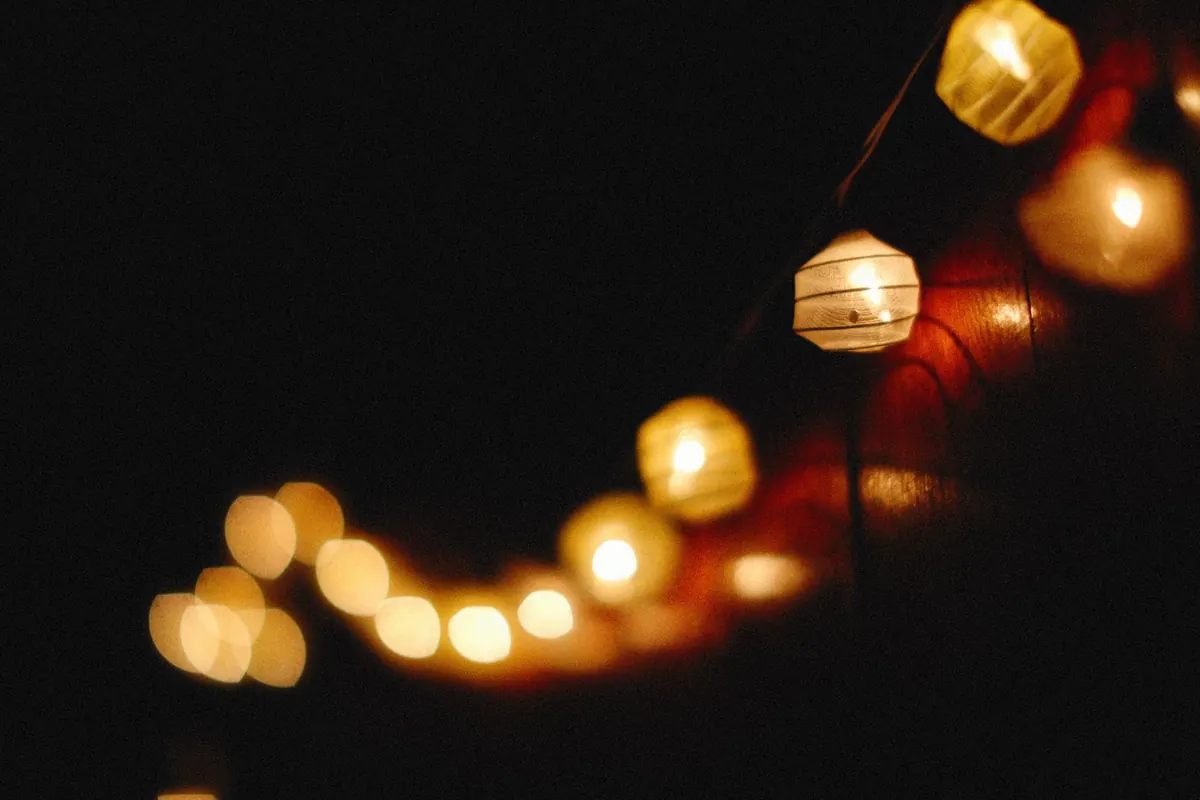
Photo: Couleur / Pixabay
A practical checklist for lakeside lantern releases: permits, biodegradable materials, written wind limits, launch...
Lumens, kelvins and CRI decide how bright a lantern feels, what color its light casts, and whether you can tell red...
Rust on an old lantern is usually surface damage, not a death sentence. Here's how to clean, polish and reseal one...

Bright ideas and beautiful lanterns for every space..
